Unveiling the IAEA’s Recommendations
The American Veterinary Medical Association (AVMA) published an insightful article detailing the International Atomic Energy Agency’s publication on “Radiation Protection and Safety in Veterinary Medicine.” This comprehensive guide offers a deep dive into the safety protocols surrounding the use of ionizing radiation in veterinary care.
The Radiographic Realities of Veterinary Practice
Veterinarians often employ advanced imaging technologies, such as X-rays, CT scans, and other radiological procedures, to diagnose and treat our beloved pets. These tools, while vital for pinpointing medical issues, come with inherent risks. The ionizing radiation emitted by these machines can harm the medical professional if safety precautions aren’t followed meticulously.
What the AVMA Has to Say
The AVMA emphasizes that while many US veterinarians might already be familiar with state veterinary practice act regulations, the IAEA’s document can also serve as a blueprint for those countries in the process of developing their radiation safety regulations. The guide not only discusses the protection of veterinary professionals but also delves into optimizing radiation exposure to animals. A notable point is the increasing use of these technologies outside conventional settings, such as farms, stables, and zoos. As the demand for top-tier animal care surges, so does the need for qualified personnel skilled in safely operating these advanced machines.
Radiation Safety: Why it Matters
No level of ionizing radiation exposure is entirely safe. It might go unnoticed due to the lack of immediate physical sensation, but prolonged exposure can damage tissue. This safety report emphasizes the potential pitfalls, such as the misuse of ionizing radiation without proper veterinary indications, and touches upon the challenges that advancements in human medicine might present to veterinary professionals.
INFAB’s Solution: Elevate Safety Without Compromising Style
At INFAB, our dedication lies in ensuring the safety of these hard-working veterinarians. We’re proud to introduce our range of protective gear:
- Optimum Protection: Our lead-free material offers top-notch protection against scatter radiation.
- Eye Safety with a Touch of Elegance: We have high-quality lead glasses, with options from renowned brands like Gucci and other performance-oriented brands like Nike, to shield those precious eyes from radiation.
- Thyroid Collars: Protecting the thyroid is vital due to its sensitivity to radiation, and our thyroid collars are designed for that very purpose.
- Customization: Bring a touch of personal flair to your clinic with our customizable aprons. Match them to your brand, complete with monograms and logos.
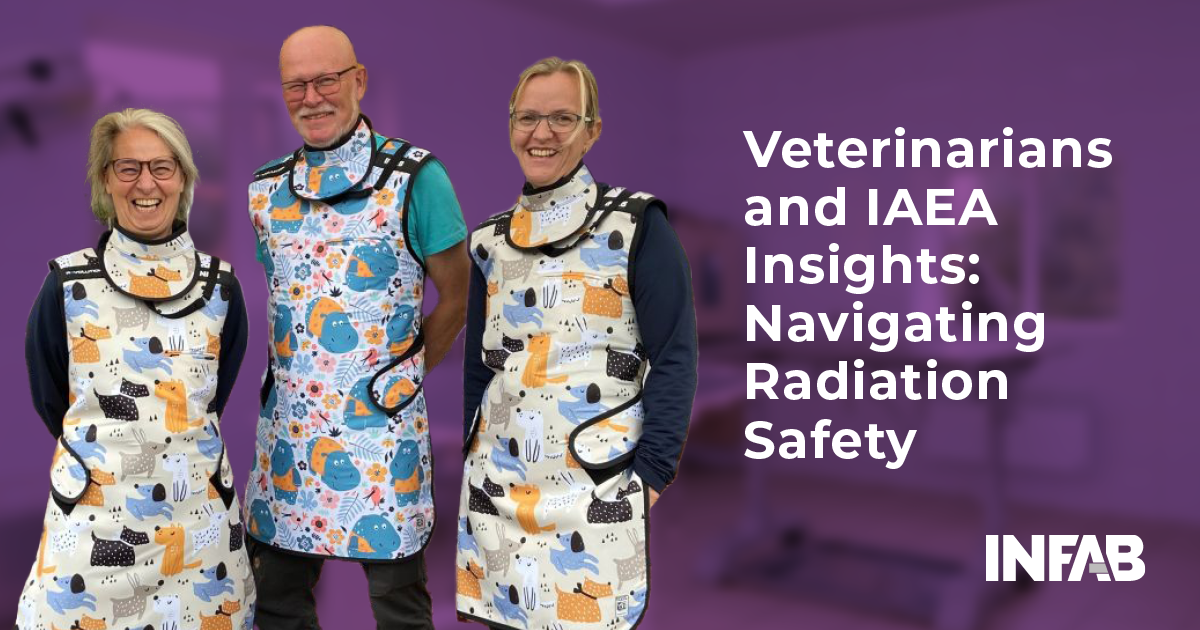
- Fun & Engaging Designs: Choose from aprons with delightful pet-themed patterns, merging safety with a touch of whimsy.
A Thank You to Veterinarians
We conclude with a heartfelt thank you to all the veterinarians out there. Your unwavering dedication to ensuring the well-being of our pets, even when faced with potential health risks, doesn’t go unnoticed. At INFAB, we’re here to support you, ensuring that you have the tools and protection you need to keep doing your essential work safely.
Download the IAEA Radiation Protection and Safety in Veterinary Medicine
Cima, Greg. “Radiation guide released for veterinary medicine.” JAVMA News. Published on May 12, 2021. Accessed from https://www.avma.org/javma-news/2021-06-01/radiation-guide-released-veterinary-medicine.
